Scarring and uneven texture
Whether it is from breakouts, injuries or inflammation, scars do not have to be permanent. The breakout is long gone, the injury healed, but the scar still catches the light in the wrong way every time. Most people who come to us do not want perfect skin. They want skin that feels whole again.
What it treats
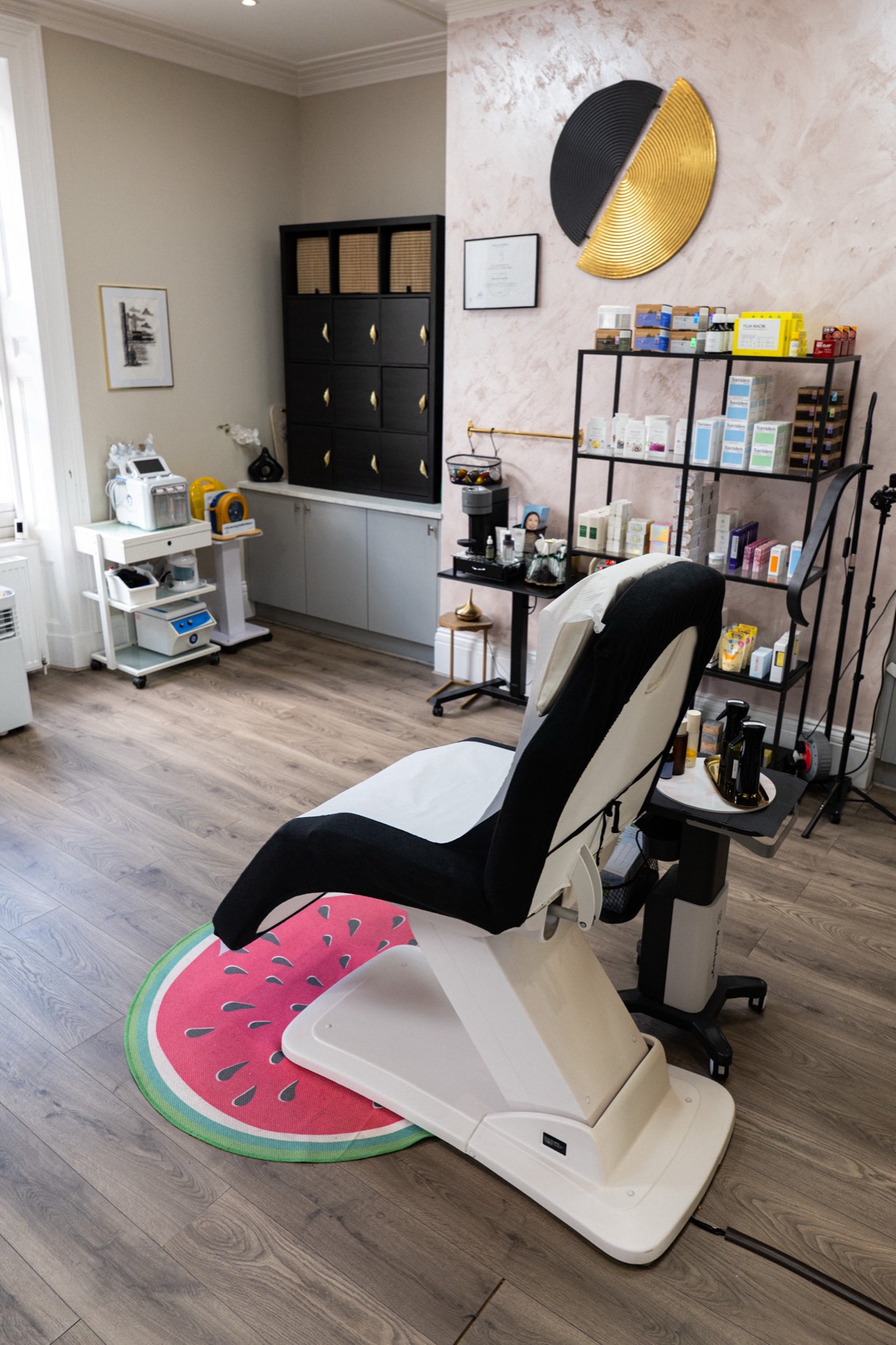
Not all scars are the same
Each scar type needs its own plan, and its own timing. Treating them all the same way is why results disappoint.
- Ice pick scars: deep and narrow, and best treated one at a time.
- Boxcar scars: sharp edged, and often respond to targeted work.
- Rolling scars: tethered down, and usually need releasing before resurfacing.
- Raised scars: a different problem entirely, and not treated by resurfacing.
- General roughness: often a texture and barrier issue rather than true scarring.
Part of the assessment is telling you which of these you actually have, because people are frequently sold the wrong treatment for their scar type.
Why you cannot rush scar treatment
Most scars do not need aggressive laser or peels. They need your skin to be strong enough to respond.
- Treat too soon and texture can worsen.
- Pigment can increase, especially in skin of colour.
- Healing can be poor.
- The scar can set and become harder to shift afterwards.
So we follow the sequence: rebuild the barrier, settle inflammation, support structure, and only then target texture and scars.
How we assess scarring
You will not be treated based on a photograph. You will be treated based on your skin’s real capacity to heal.
- Vectra 3D imaging, to assess scar depth, shape and skin stress.
- Observ and skin measurement, to measure hydration, inflammation and pigment.
- Hands-on examination, to tell scar tissue from shadowing.
That last point matters more than people expect. Some of what looks like scarring is shadow from volume loss, which needs a completely different approach.
The repair protocol
We are not chasing perfect. We are aiming for meaningful, structural softening.
- Recovery phase: LED, exosome therapy, and electroporation with regenerative actives, to calm inflammation and repair the barrier.
- Stimulation phase: radiofrequency microneedling to trigger collagen from below, targeted low-heat resurfacing, subcision-style needling for anchored scars, and exosome support to reduce downtime.
- Contour correction where scarring has caused flattening or shadowing, using ultrasound-guided soft filler or biostimulatory injectables, and only when appropriate.
For most people that means softer texture, less light catch in photographs, makeup sitting more evenly, and smoother skin under touch.
Before & after
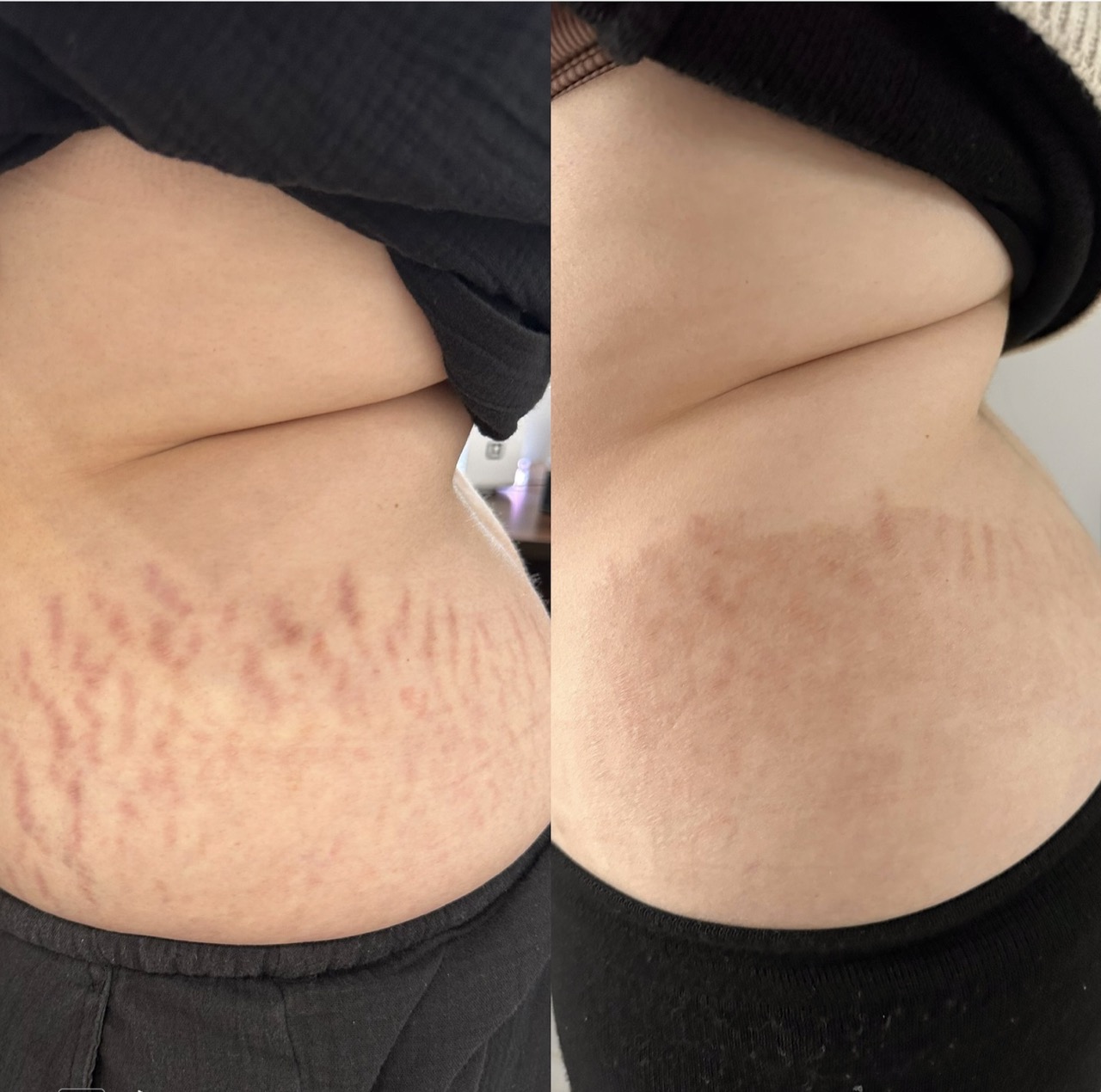
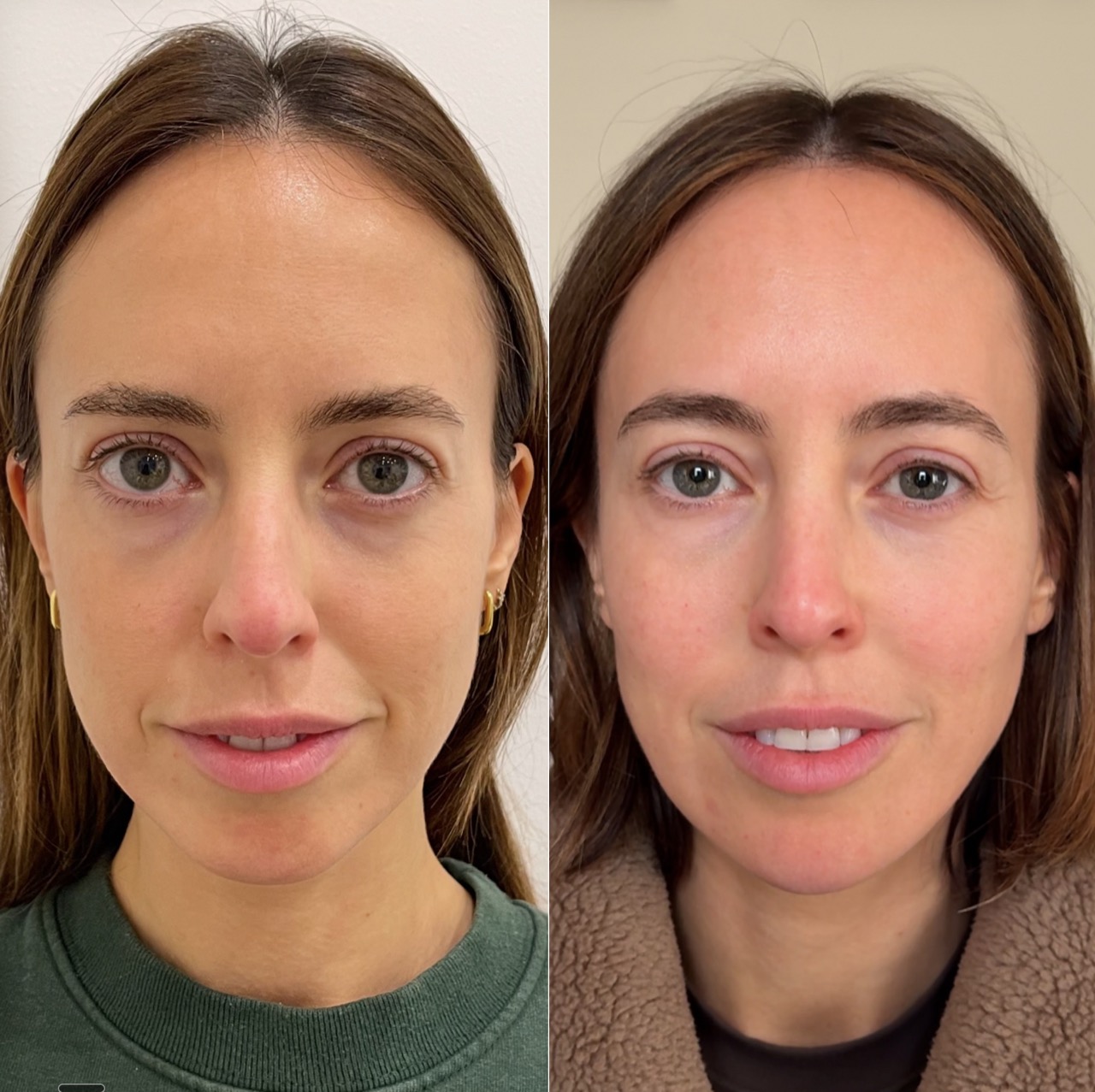
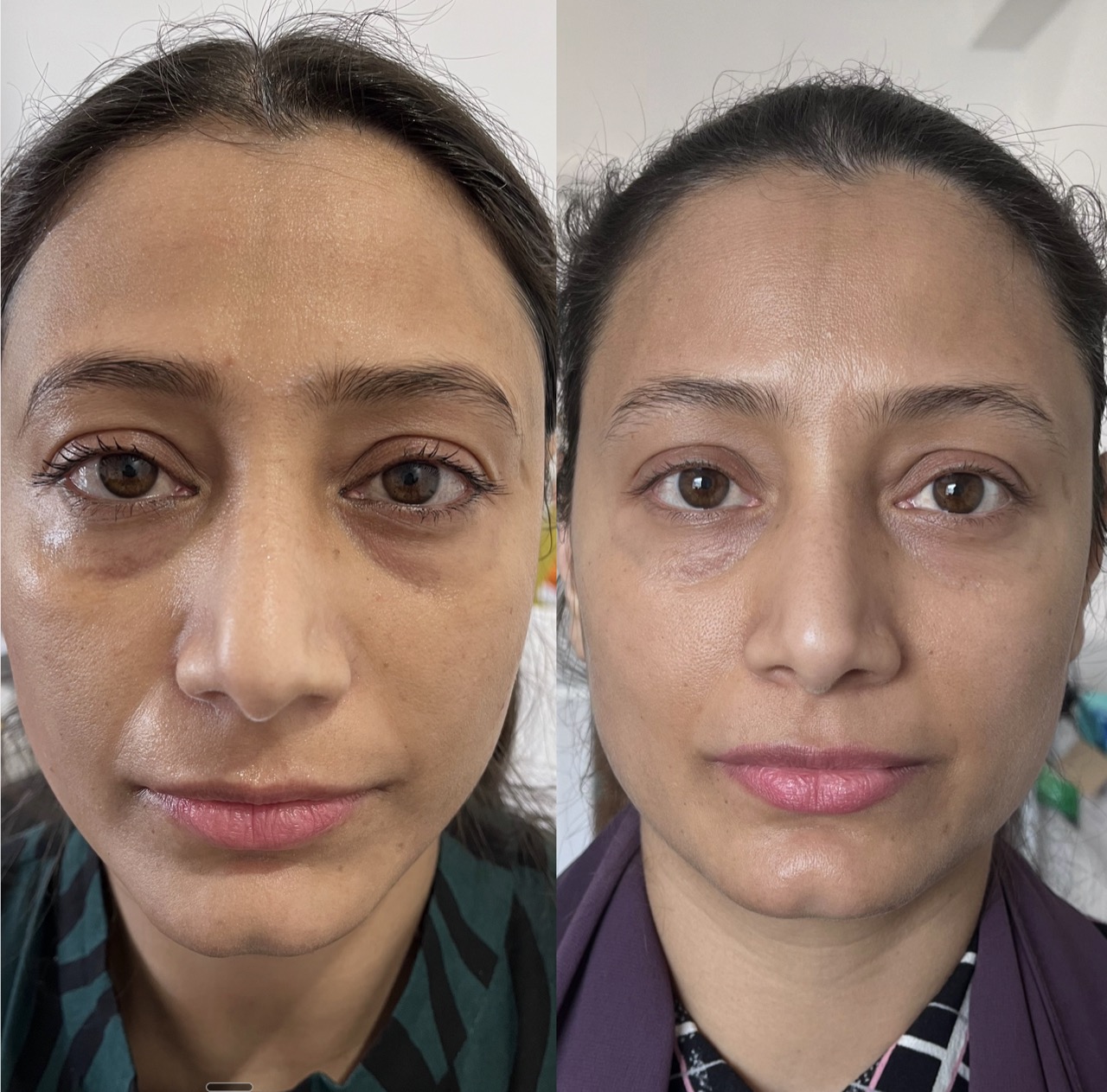
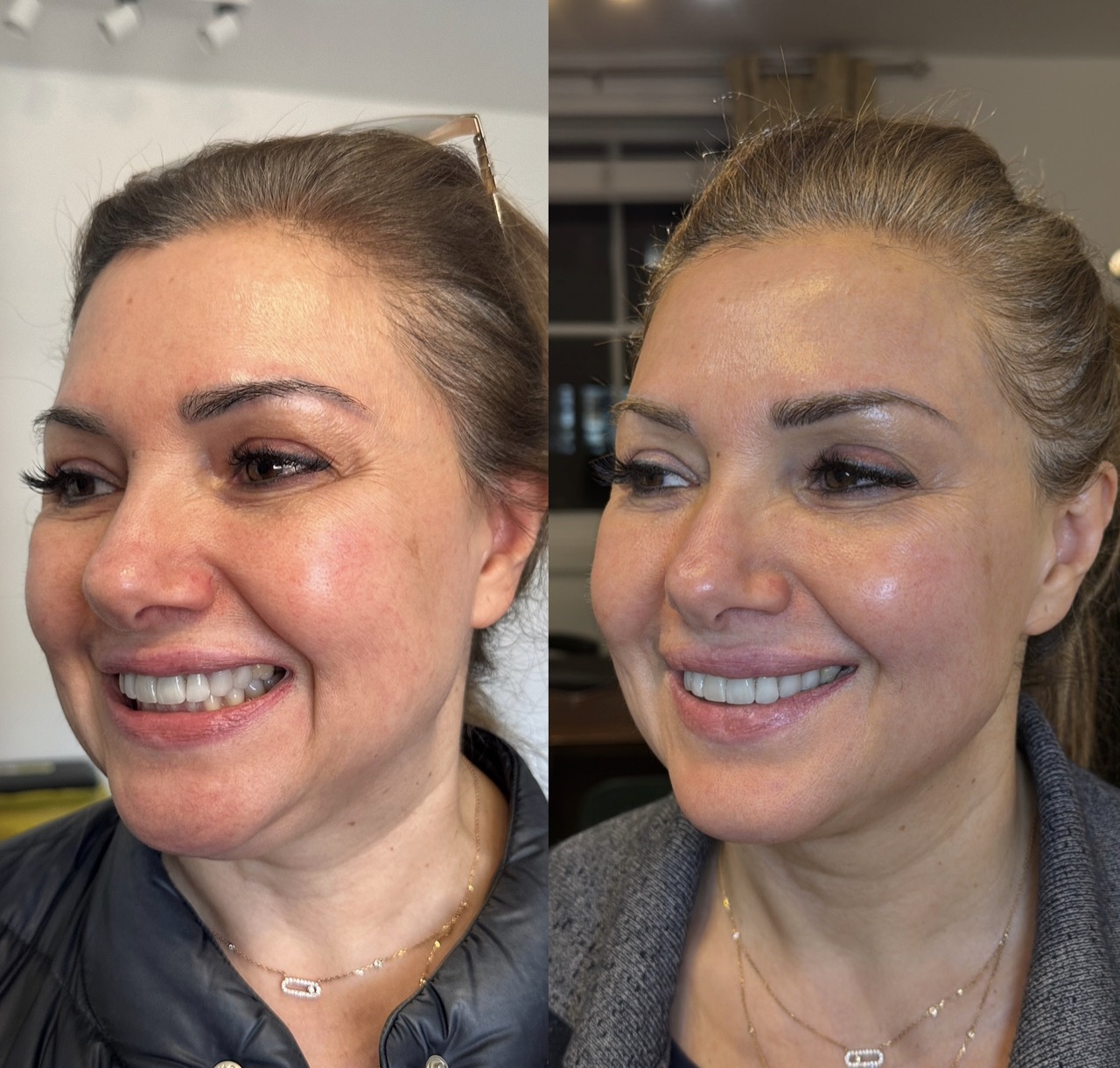
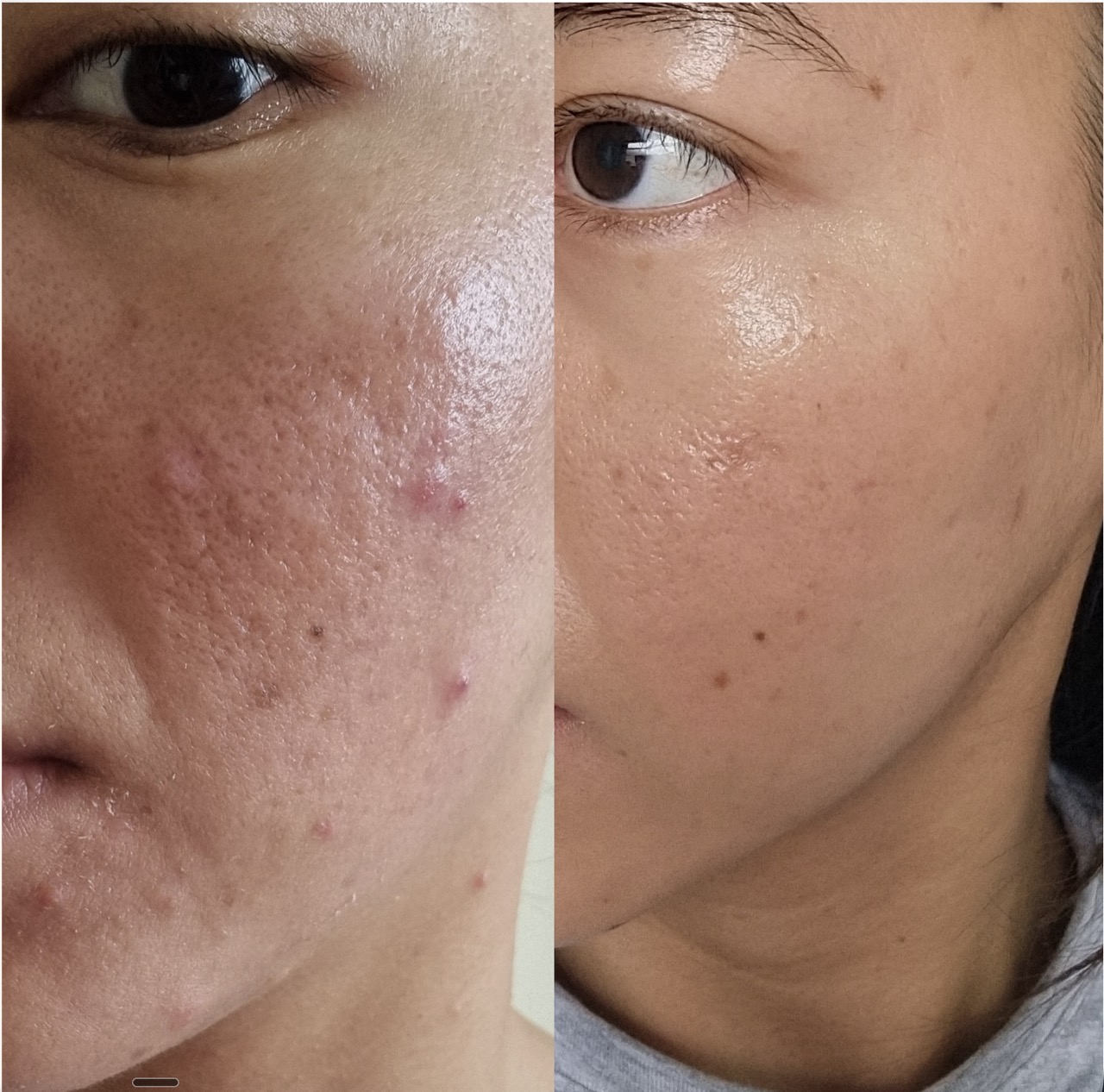
Real Harmony Medical patients, shared with consent. Individual results vary.
Questions, answered
Not removed, but genuinely improved. Atrophic scars can be filled from below by stimulating collagen, and tethered scars can be released. Anyone promising complete removal is overselling. The realistic aim is softer texture and much less light catch.
It depends on the type. Ice pick scars respond best to targeted work such as TCA CROSS. Tethered rolling scars usually need subcision first. Broad texture responds to resurfacing. That is why the assessment comes before the recommendation.
Yes, with the right sequence. The risk is post-inflammatory pigmentation, so we settle inflammation first, use lower heat and lower density, and support recovery with exosomes and LED. Rushing is what causes pigment problems, not the treatment itself.
Usually a course rather than one appointment, and often more than one type of treatment. We photograph at each visit under the same conditions, because collagen change happens slowly and is difficult to see day to day.
Not yet. Treating scars while acne is still active means new scars form while we are working on old ones, and the inflammation raises the pigment risk. We clear first, then treat texture.