TCA CROSS for ice pick and boxcar scars
TCA CROSS treats deep, narrow acne scars one at a time. A high strength solution is placed inside the scar itself, not across your whole face, so the healthy skin around it is left alone. That is what makes it useful for ice pick and boxcar scars that peels and lasers tend to skate over.
What it treats
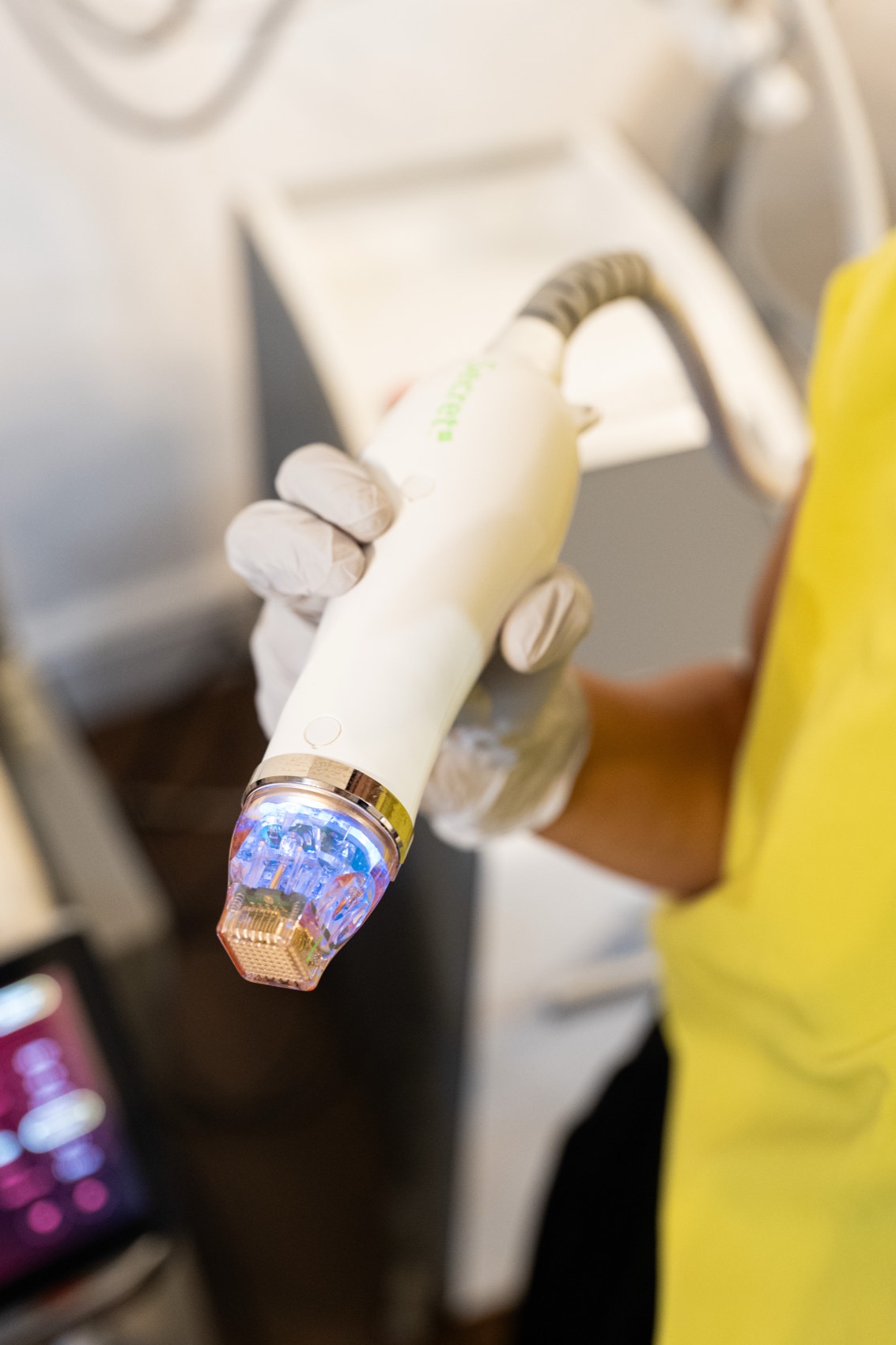
What TCA CROSS actually is
CROSS stands for chemical reconstruction of skin scars. The active is trichloroacetic acid, the same acid used in chemical peels, but used in a completely different way.
- It is applied only inside the scar, with a fine applicator, one scar at a time.
- It is used at high strength, where a face peel uses low strength.
- It reaches the base of the scar rather than the surface of the skin.
- The controlled injury makes the skin build new collagen inside the scar.
As that collagen forms, the scar fills from the bottom up and the edge softens. This is a rebuilding treatment, so the change appears over months rather than days.
Why not just have a normal peel
A standard peel and TCA CROSS share an ingredient and nothing else. The difference matters most if you have a few deep scars rather than general texture.
- Strength: CROSS uses a high concentration. A face peel uses a low one.
- Placement: CROSS goes inside the scar. A peel goes across the whole face.
- Depth: CROSS reaches scar tissue. A peel mainly affects the upper layers.
- Recovery: with CROSS only the treated spots heal. With a peel your whole face heals.
- Risk of marking: lower with CROSS, because most of your skin is untouched. This matters on deeper skin tones, where a full-face peel carries more risk of pigmentation.
If your concern is overall roughness and dullness, a peel is the better tool. If it is a handful of deep, narrow scars, CROSS is.
Our protocol, and why we stack it
The main drawback of this treatment is pigmentation afterwards, especially on deeper skin tones. Everything we add is aimed at that.
- Assessment: we identify which scars will respond, because not all types will.
- Application: precise placement of the acid inside each scar, then neutralising.
- Exosomes straight afterwards, to support repair and settle inflammation.
- LED therapy, to reduce inflammation further.
- Targeted cooling, to calm the skin and limit swelling.
- A written aftercare plan with the products to use while it heals.
We may also combine CROSS with subcision or resurfacing where scars are tethered down, because releasing a tethered scar first gives the acid something to work with.
Healing and what results look like
This treatment looks worse before it looks better, and knowing the sequence makes it much easier to live with.
- The treated spots go frosty white within seconds. That is expected.
- Small dark scabs form over the next day or two, only on the treated spots.
- Scabs come away by themselves in about five to seven days. Do not pick them.
- The skin underneath looks pink at first, then settles.
- Filling and softening builds over three to six months as collagen forms.
Most people need three to four sessions, four to six weeks apart. We photograph at each visit, because gradual change is genuinely hard to see in the mirror.
Before & after
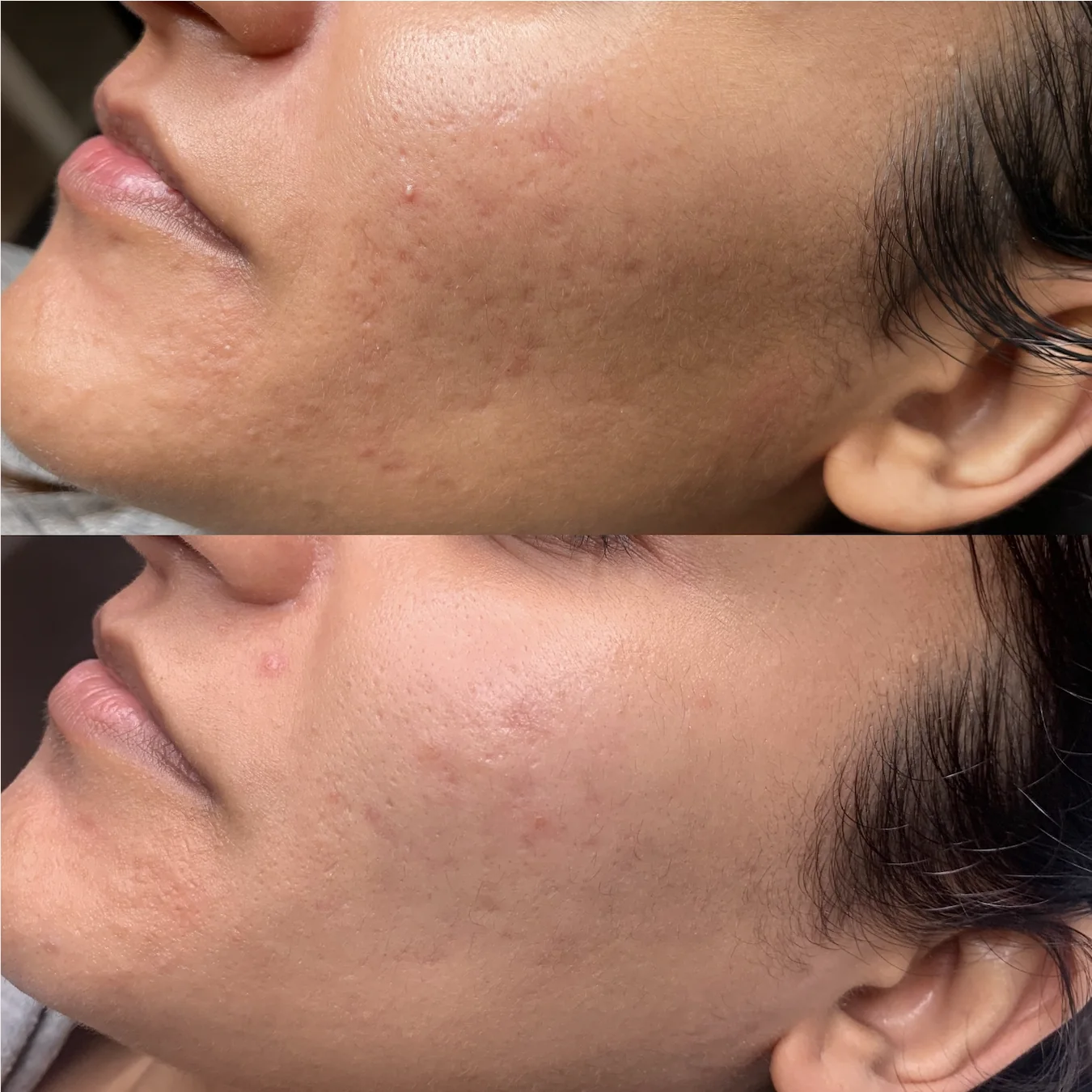

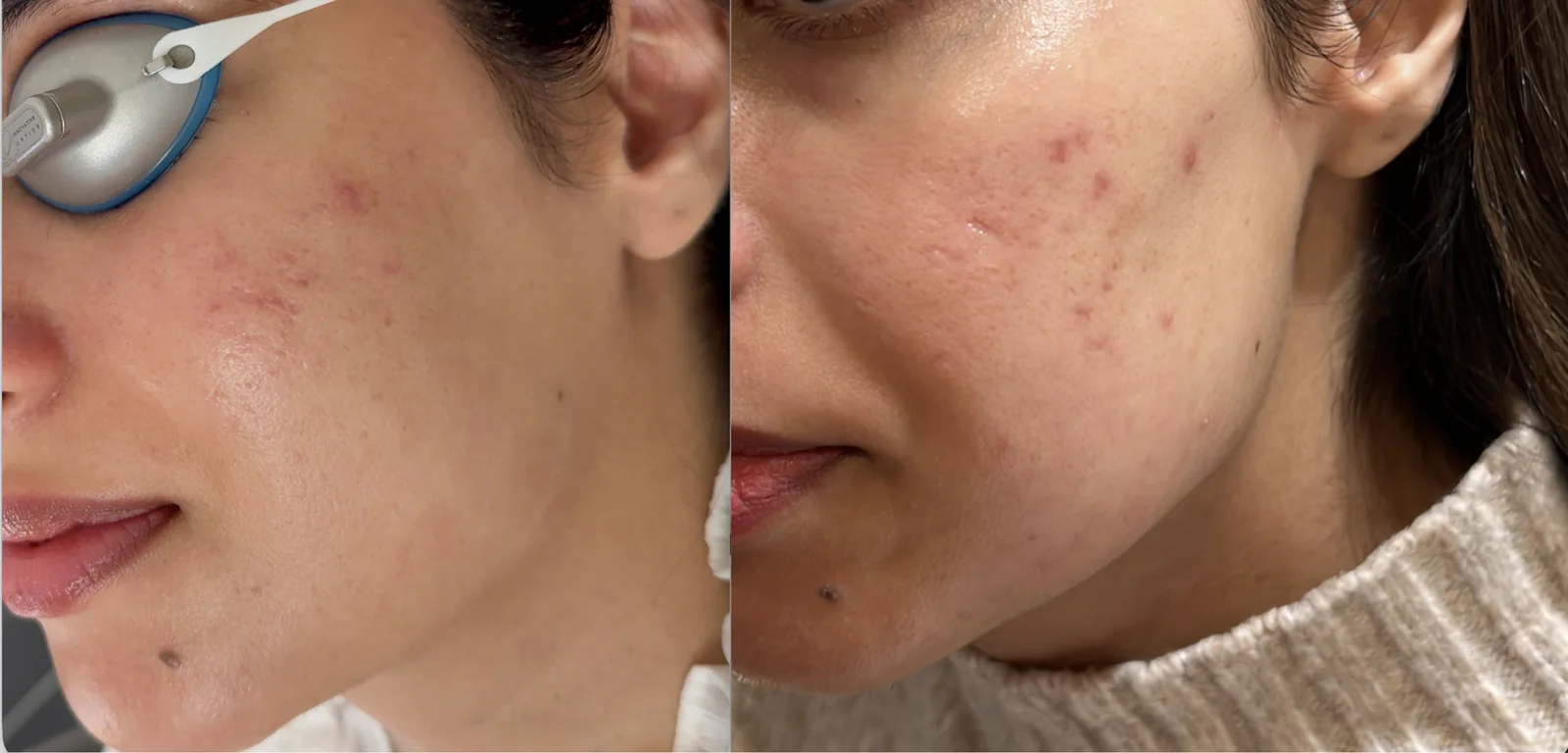
Real Harmony Medical patients, shared with consent. Individual results vary.
Questions, answered
They share an ingredient and nothing else. A peel uses a low strength across your whole face and treats the upper layers. TCA CROSS uses a high strength placed inside individual scars, reaching the scar base. Only the treated spots heal, so there is less downtime and less risk of marking.
Deep, narrow scars. Ice pick scars respond best, and boxcar scars with sharp edges also do well. Rolling scars that are tethered down usually need subcision first. Raised scars are a different problem and this is not the right treatment for them.
The treated spots turn frosty white within seconds, then form small dark scabs over a day or two. Those come away by themselves in about five to seven days. Leave them alone. The skin underneath is pink at first and settles over a couple of weeks.
Usually three to four, spaced four to six weeks apart. It depends on how deep the scars are and how your skin responds. We photograph at every visit, because this kind of gradual change is hard to judge in the mirror.
It is often a better choice than a full-face peel on deeper skin tones, precisely because most of your skin is untouched. Pigmentation afterwards is still the main risk, which is why we add exosomes, LED and cooling straight after treatment and give you a written aftercare plan.
About 30 minutes, including the exosome, LED and cooling steps afterwards. Discomfort is brief and sharp at the moment of application, then settles quickly.