Dark circles and tired eyes
No matter how well you sleep, your eyes still tell a different story. It is not in your head, and it is not just about getting more sleep. This is not about looking young. It is about looking how you actually feel: rested, present, and like yourself.
What it treats

Most people are told to just get filler. We do not start there
If you have been told to just fill the tear trough, but something about that felt off, you were not wrong.
- The eye area is thin, expressive and complicated.
- Adding volume without understanding why your eyes look tired can leave you overfilled or puffy.
- Tear trough filler is one of the areas we most often end up dissolving for people.
- So we look at the whole face, not just the circle under your eye.
The questions we ask first: is the skin too thin or too inflamed to hold product well? Has the midface changed shape and created shadow? Is pigment involved, or is it light catching a hollow? Is it genetic, and what can realistically be softened rather than erased?
Strengthen the skin first
We use gentle, non-invasive treatment to support the fragile skin around the eyes, so it becomes more resilient and less prone to showing shadow.
- Regenerative serums delivered without needles or heat.
- Exosomes combined with polynucleotides in the under-eye area, which is our own protocol.
- Light therapy, to reduce irritation and support healing.
- Cooling, corrective skincare to ease inflammation and puffiness.
This phase alone changes how much shadow shows, because thicker, healthier skin is less translucent.
Support the face beneath the eye
Most dark circles are actually shadows, caused by a loss of support under the eye rather than by pigment.
- We may gently lift the cheek or midface to bring natural light back to the area.
- We use very light, precise filler only when the face is ready for it.
- We do not inject the under-eye directly unless it is genuinely the right choice.
- Where there is existing filler, we scan first and often dissolve before anything else.
Getting this order right is the difference between looking rested and looking treated.
Treat the colour, carefully
If genuine discolouration is playing a part, we address it, but the eye area does not tolerate the approaches used elsewhere on the face.
- Restoring hydration to the skin, so blood vessels show through less.
- Strengthening skin density over time.
- Addressing pigment or long-standing redness, but only once the skin is ready.
- Never injecting blindly, and always checking skin quality before treatment.
Quick fixes around the eyes rarely last. The skin is too thin, the muscles too active, and the results too visible if it goes wrong. We build change over time instead.
Before & after
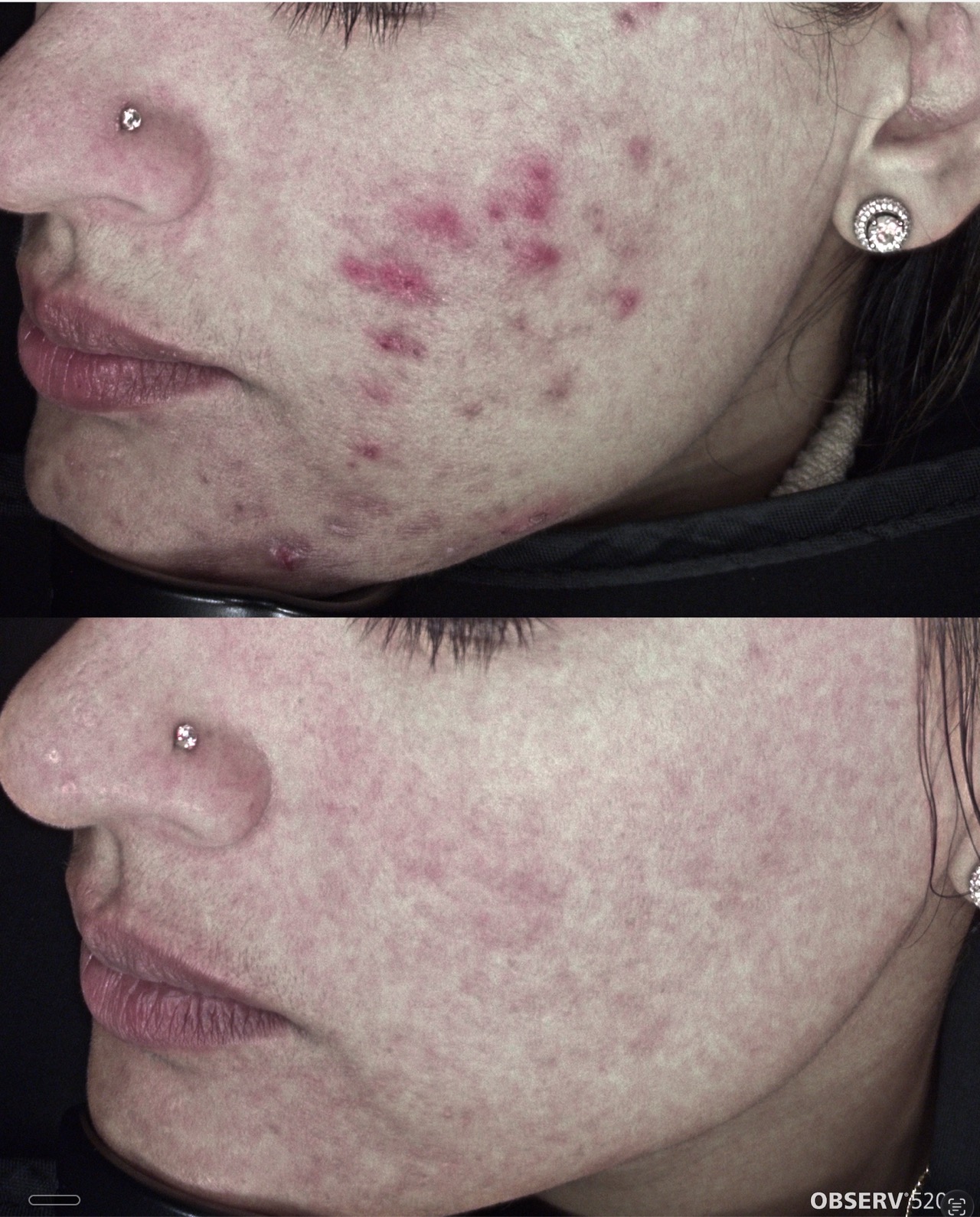
Real Harmony Medical patient, shared with consent. Individual results vary.
Questions, answered
That is exactly what the assessment answers, and it changes the treatment completely. Shadow from a hollow needs structural support. Pigment needs a pigment plan. Thin skin showing vessels needs the skin thickened. Our imaging separates them.
Sometimes, but it is far from the automatic answer, and the under-eye is one of the areas we most often dissolve for people. If the skin is thin or inflamed, or the midface has lost support, filler placed directly under the eye tends to look puffy.
Usually not completely, particularly where the hollow is genetic. What we can do is soften how much shadow shows and improve the skin quality around the eye. We would rather tell you that at the start than promise otherwise.
We scan first. Ultrasound shows where that filler actually sits and how much there is. In most of these cases dissolving comes before anything else, and the skin is then supported afterwards.
This area is built over time rather than in one appointment. Skin support comes first, usually over several weeks, and structural work only if it is needed. You will not leave looking frozen or overfilled.