Acne and breakouts
You have tried the creams, the facials, the antibiotics. You have been told it is just hormones, or that you will grow out of it. Every time you think it is getting better, the breakouts return. We treat acne that does not respond to quick fixes, because we do not guess. We diagnose.
What it treats
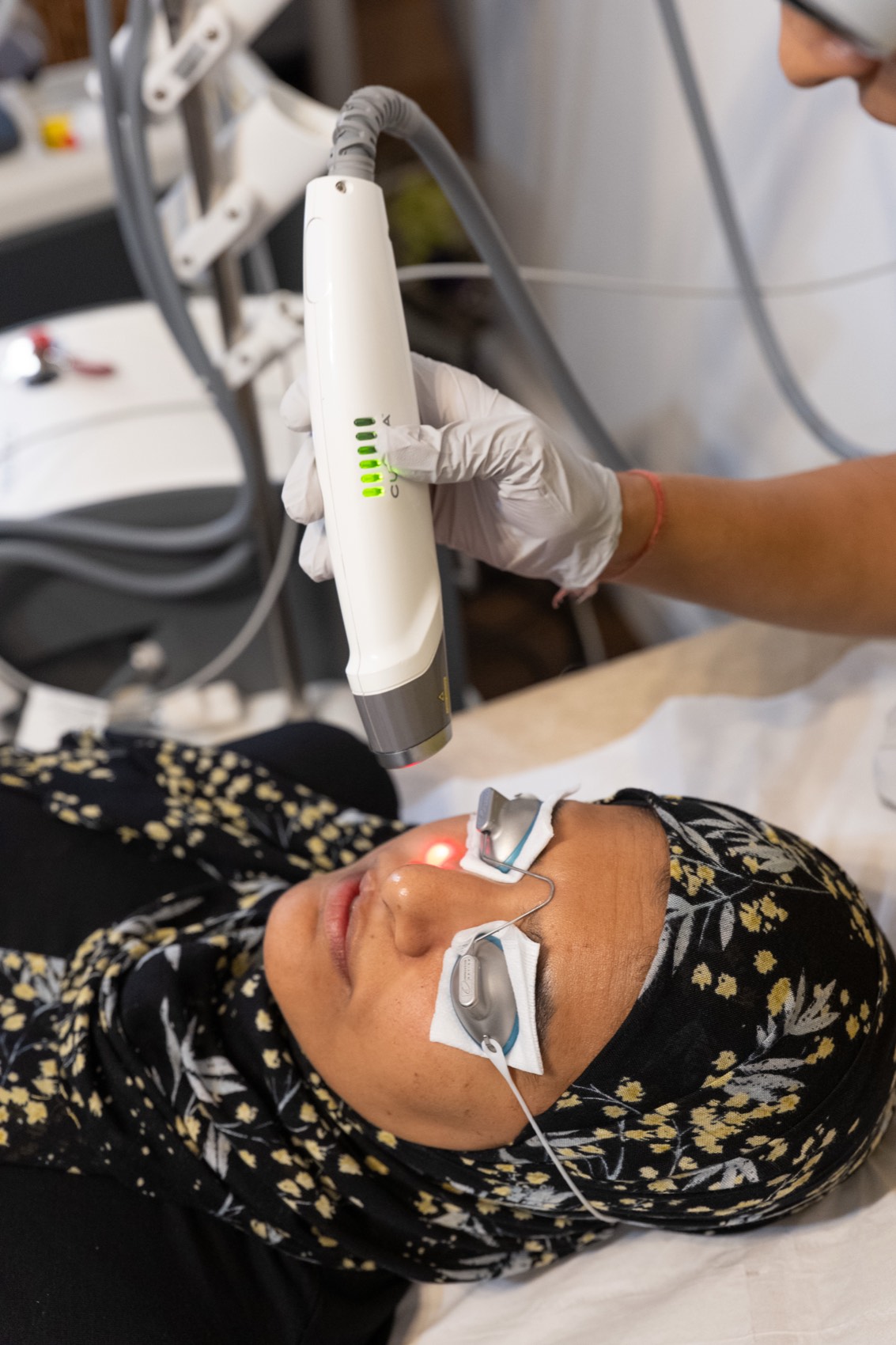
Why most acne plans do not work
Most acne treatment fails because it starts at the wrong point. Instead of asking why your skin is inflamed, it throws products at it.
- Harsh acids, antibiotics and acne-safe skincare, without checking whether your skin can tolerate any of it.
- No assessment of whether the barrier is intact before actives are started.
- The same protocol regardless of what type of acne you actually have.
Acne is not about scrubbing harder. It is about understanding what stage your skin is in and responding to that.
The correct sequence
We follow the same clinical order every time, and we do not skip ahead.
- Barrier first. Can your skin tolerate treatment at all?
- Inflammation next. What is driving the flare?
- Then structure, texture and pigment, and only if the skin is ready.
If the barrier is not stable, going straight to clearing treatments is what causes the setbacks people arrive here with.
How we diagnose it
We do not start with peels or prescriptions. We start with a diagnostic consultation, because without diagnosis you are guessing.
- Vectra 3D imaging, to map breakout patterns, congestion zones and structural stress.
- Observ and skin measurement, to assess oil flow, inflammation depth and sensitivity.
- Blood tests where relevant, especially where there is hormonal or metabolic involvement.
That builds a profile of your skin which explains why it keeps reacting, and what it needs in order to stop.
Your personalised plan
Once we know the type and the driver, we build the plan in stages.
- Barrier repair: electroporation with barrier-restoring serums, LED to reduce inflammation, and a stripped-back topical routine.
- Inflammation control: exosome therapy, low-level laser, and supportive supplements only where clinically indicated.
- Clearing: AviClear where suitable, enzyme or acid treatments if the skin is strong enough, and extractions only if required and only by trained hands.
- Scarring and pigment last, once clearing is achieved and the skin is ready.
If you have been told you are just acne-prone, you have been underserved. We do not treat acne as a nuisance. We treat it as a condition that deserves clarity.
Before & after
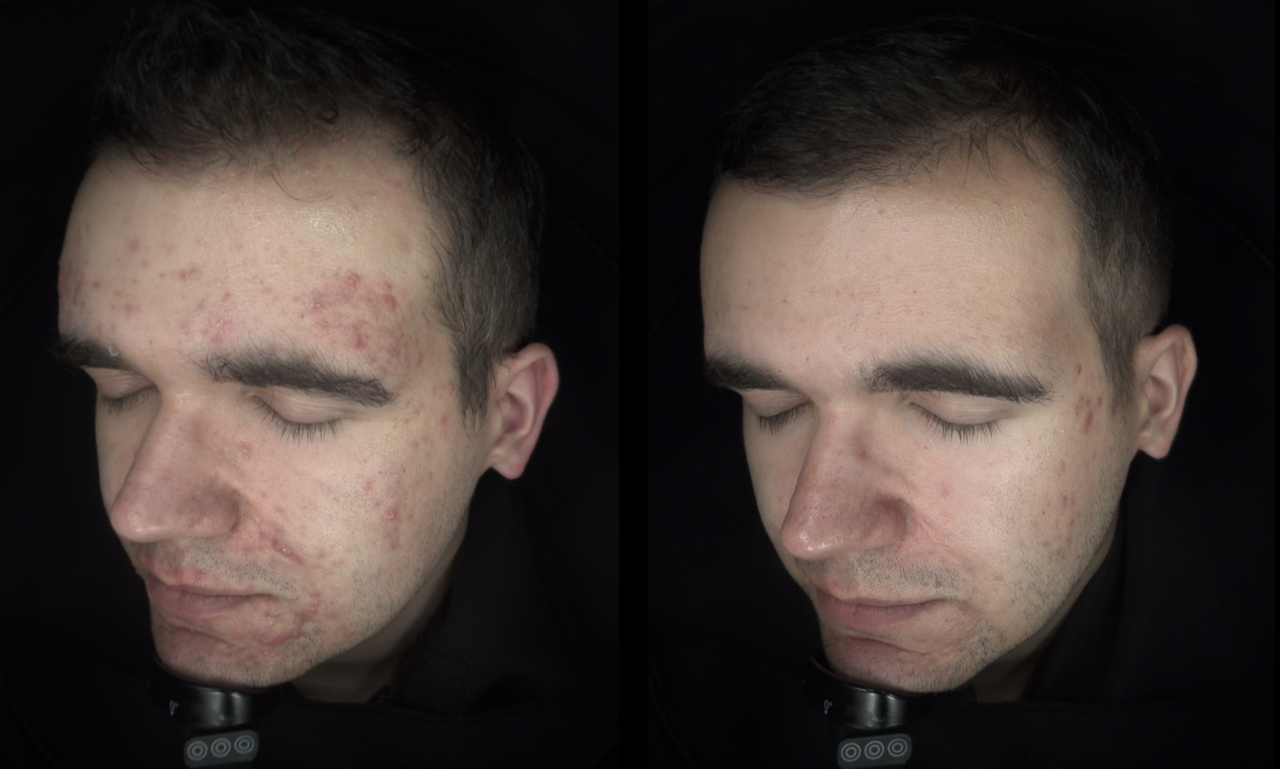
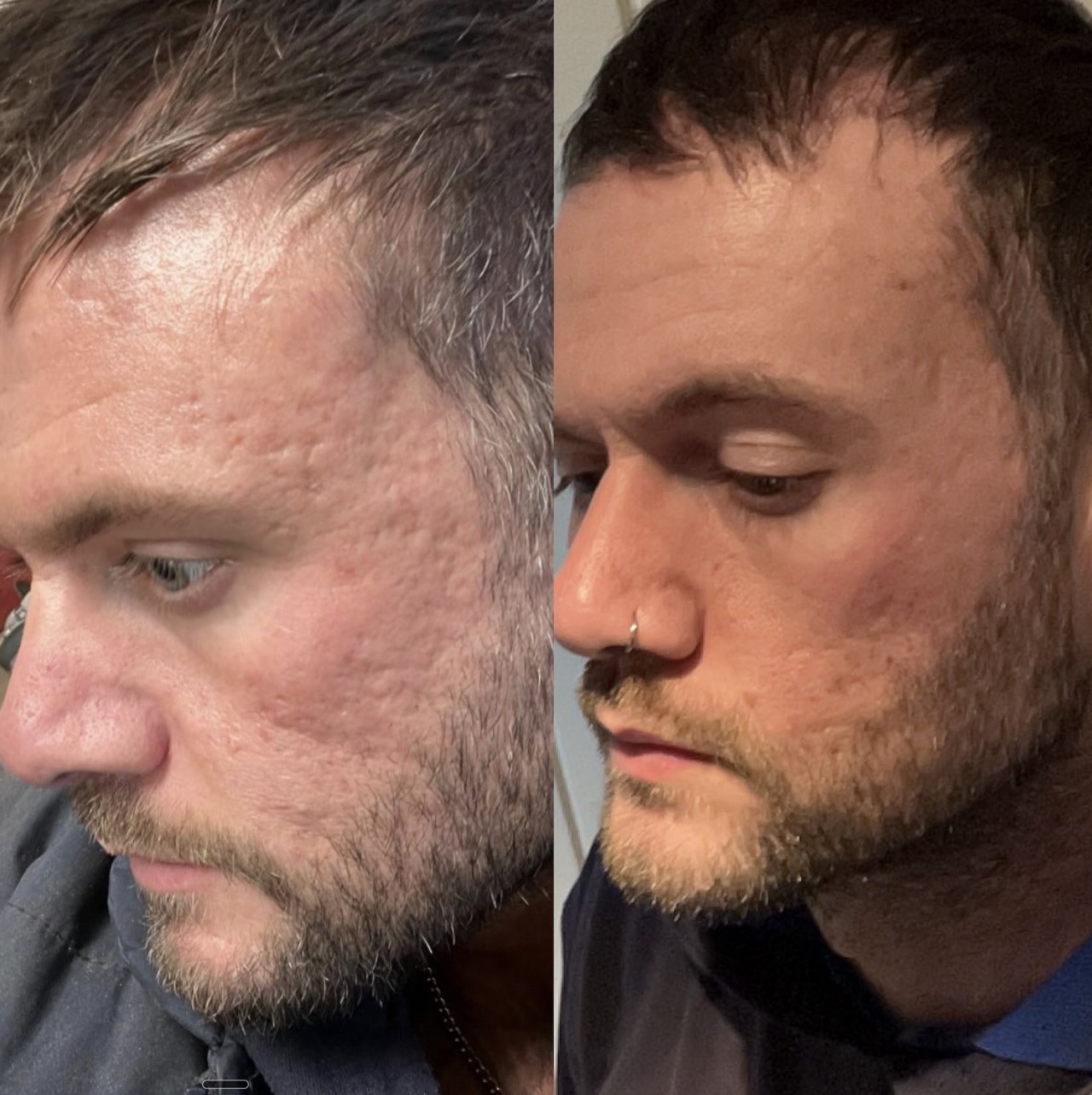
Real Harmony Medical patients, shared with consent. Individual results vary.
Questions, answered
Because we start by working out what is driving it rather than trying another product. Most plans that fail were aimed at the wrong stage of the skin, or started actives on a barrier that could not tolerate them. We check that first.
Not as a starting point. Antibiotics can have a place, but they do not address why the skin is inflamed, and long courses have their own problems. We would rather find the driver.
Not always. Fungal acne is regularly mistaken for clogged pores, and rosacea in deeper skin tones is regularly treated as acne for years. Our imaging is how we tell them apart, and getting that wrong is why some people get worse with treatment.
It depends where your skin starts. If the barrier needs stabilising first, that phase comes before clearing, and rushing it costs you more time overall. We will give you a realistic sequence at your consultation rather than a promise.
We treat those, but last. Working on pigment or texture while the skin is still inflamed tends to make pigmentation worse, particularly in deeper skin tones. Clearing first, then texture and pigment when the skin is stable.