Migraine, headaches and jaw tension
Headaches, jaw clenching and neck tension are often one problem, not three. Overworked muscles around the jaw, temples and neck can drive pain, wear your teeth down and keep a headache cycle going. We assess the whole pattern first, then treat the muscles that are actually doing the work.
What it treats
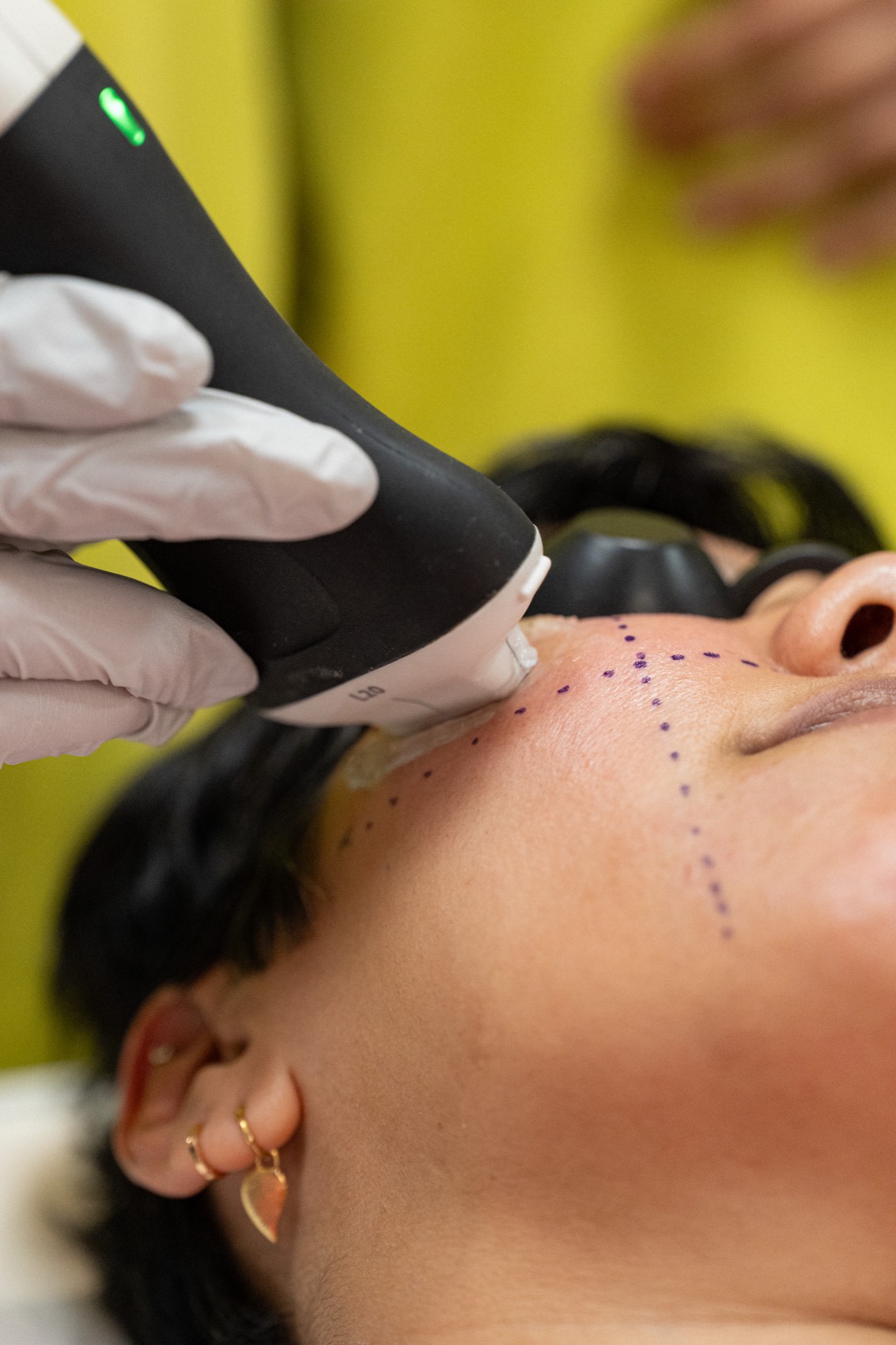
Why headaches and jaw tension travel together
The muscles that close your jaw also attach around your temples. The muscles that hold your head up run into your neck and shoulders. When one group works too hard, the others take the load.
- Clenching or grinding overloads the jaw muscles, which refers pain into the temples.
- Tension headaches often sit exactly where those muscles attach.
- Hours at a desk or on a phone train the neck and shoulders to hold a braced position.
- Pain then keeps the muscles tight, which keeps the pain going.
This is why treating one muscle in isolation often disappoints. Relax the jaw alone and the neck usually takes over. We plan for the whole chain from the start.
What we assess before we treat
Assessment is the part that decides whether this works. We take a full history and map where your pain actually sits.
- How many headache days you get, how long they last, and what sets them off.
- Whether you clench in the day, at night, or both.
- How your teeth meet, and whether there is wear, cracking or sensitivity.
- Which muscles are tender, and whether the tightness is one-sided.
- How your neck and shoulders sit, and how far you can move comfortably.
Our team includes dentists, so we look at your bite as well as your muscles. If we find tooth wear, a joint problem or a bite issue, we will tell you and recommend you see your own dentist alongside us. We would rather find that early than treat around it.
How treatment works
Treatment is with a prescription muscle-relaxing injection. Whether it suits you is decided at your consultation, after the assessment above.
- It quietens the signal between nerve and muscle, so the muscle stops holding on.
- Doses are placed across several small points, mapped to your pain pattern.
- We treat the accessory muscles too, not only the main chewing muscle, so the load does not simply move somewhere else.
- We start conservatively and adjust at review rather than aiming for maximum effect on day one.
You will usually notice a change from around week two, with the strongest effect near week six. Most people repeat every three to four months. Because the effect wears off, we can adjust each round based on what your muscles actually did.
Neck, shoulders and posture
If your tension sits across the tops of your shoulders, the trapezius muscles are usually involved. Treating them can ease the pull that feeds back into your neck and head.
- Eases the braced, hunched position that builds up at a desk or on a phone.
- Reduces the trigger points that refer pain up into the head.
- Often improves how comfortably you can turn and hold your head.
- No downtime, so you can go straight back to your day.
We assess your neck and shoulders as part of the same appointment, because treating the jaw while the neck stays braced tends to give short-lived relief.
Questions, answered
Often, yes. The muscles that close your jaw attach around your temples, so an overworked jaw commonly refers pain into the side of the head. Many people arrive thinking they have two separate problems. We assess both together, because treating one and ignoring the other usually gives short-lived relief.
You will usually feel a change from around week two. The effect is strongest near week six. Most people repeat every three to four months. Some find the jaw holds longer once the muscle has been calmed a few times.
Yes, that is the aim. We are reducing how hard the muscle grips, not stopping it working. This is why we start conservatively and review, rather than using a large dose straight away. If chewing feels weaker than you expect, tell us at review and we will reduce the next dose.
It often can, if the tension sits across the tops of your shoulders. We assess your neck and shoulders in the same appointment. Treating the jaw while the neck stays braced tends to give shorter-lived relief, so we plan for both.
Probably not. This is aimed at chronic migraine and frequent tension headaches, or at clenching and grinding that is causing pain or tooth wear. If your headaches are occasional, we will say so and suggest something more proportionate.
Sometimes. If we find tooth wear, cracking, or a bite or joint problem, we will tell you and recommend you see your own dentist alongside treatment with us. Relaxing the muscle can reduce the damage being done, but it does not repair a worn tooth or fix a bite.
Most people describe it as a series of quick pinches. It takes 20 to 30 minutes. We can use numbing if you are sensitive. There is no downtime and you can go back to normal activities the same day.